
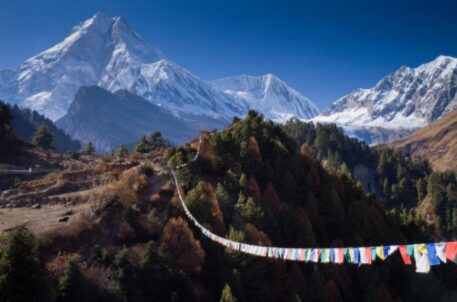
The Manaslu Circuit Trek is on a lot of trekkers’ wish lists, but the trek begins long before you reach the trailhead. Understanding the visa and permit concept is the very first step to take the eligibility test, before exploring your beneficial option for making an application under the category of economic migration. A visa gets you into Nepal, and a series of permits opens a gate into a restricted area around Manaslu. This guide has everything you need to know and more to get your Manaslu Trek paperwork in order.
Understanding the Visa for Nepal
Earlier than you could even don’t forget the unique permits for the Manaslu Circuit; you need a visa that lets you go into Nepal. An on-arrival visa for travelers is a requirement for almost all nationalities at Kathmandu airport. This is the simple and most usual option. It’s also simple: You complete a form at a kiosk, pay the visa fee (usually in U.S. dollars), and hand over your passport. It’s a good idea to have passport-sized photos and cash on hand to accelerate the process. Or you may obtain a visa from the Nepali embassy or consulate in your country before you make a trip.
Manaslu Circuit Trek is in the Special Restricted Area.
The Manaslu Circuit Trekking is rich in restricted area culture and environmental protection. Which just means that cruising on your own is not cool. By law, you must travel into the region as a group of at least two trekkers and, preferably, with a Nepali guide. This law helps preserve the backcountry and employs local people. All of your permits you’ll have to arrange through a registered local trekking agency, as they can facilitate the paperwork with the Department of Immigration.
Manaslu Restricted Area Permit (MRAP). In this regard, the inland trek was responsible for providing information on additional available permits.
The maximum critical permit to behavior the Manaslu circuit trek is the Manaslu restricted region permit (MRAP). This is the permit that enables you to officially access the special region. The charge for this permit will vary according to the season. It books up at a higher price during the high trekking months (September to November) and lower in December to August. The permit is duration-limited, and the visitor has to pay the old tariff for each additional day exceeding the duration. This is the permit that is processed by your trekking company and sent to the Department of immigration with all required documents.
The Nar-Phu and Manaslu Trek Permits.
The Manaslu Conservation Area Permit (MCAP) – Extra details of MCAP can be found.
In addition to the limited permit, trekkers on the Manaslu Trek also require the Manaslu Conservation Area Permit (MCAP). The money from this permit goes to the conservation of the Manaslu region and for the welfare of the country bumpkin living there. You can obtain the MCAP either from your trekking agency or purchase it in person at the Nepal Tourism Board’s office in Kathmandu. This is the visa that is required for the trek and is a once-off fee.
Annapurna Conservation Area Permit (ACAP) is not included, as this can easily be purchased when you arrive.
The lower half of the Manaslu Circuit trek coincides with the trail of the Annapurna Circuit, following the village of Dharapani. You will need an Annapurna Conservation Area Permit (ACAP) for the same. As with the MCAP, money earned from this permit is used for conservation and development work in the Annapurna area. Your trekking agency provides it for you, or you can apply for it yourself at the office of the Nepal Tourism Board. If you didn’t get a permit, you’ll need to produce it at the Dharapani checkpoint as you exit the Manaslu region and enter the Annapurna Conservation Area.
Documents Required for All Permits
Your trekking agency will need some essential information from you to obtain your permits. So that these will be a photocopy of your current passport, your Nepal tourist visa, and two passport photographs. Nepal travel visa. Your passport should have at least a month’s validity remaining after the date of entry. Your Trekking Agency will also require a long version of your Manaslu Circuit Trek Itinerary for your permit.
Why You Cannot Trek Solo
The government’s prohibition on hiking on my own inside the Manaslu vicinity is due to protection concerns. The shortage of improvement in the Manaslu Circuit and the excessive mountain passes in Larkya la imply that a manual is required for a few, if not all, components of the Manaslu Circuit hike. **Our manual is the first useful resource licensed, familiar with the nearby subculture, and knows how to get around. They are your saviour if you need an evac from the Manaslu Base Camp Trek or anywhere high up!
Your Trekking Agency’s Responsibility
Choosing the right trekking company is the most important factor in the Manaslu Trek. Not only will they arrange your permits, supply a registered guide, a porter, and a good itinerary is part of their service. The experience of an agency will result in an easy and safe walk where you can focus on the great experience instead of how the hell do I cross what river.
Preparing to Make the Permit Go Smoothly
Fas Tips Travel to Nepal Have all your paperwork prepared before arriving in Nepal, as applying for a visa might be a headache. This includes bringing a copy of your passport and visa, and bringing along a stash of passport-sized photos. It’s also good if you stay in almost every touch with your trekking agency and inform them about almost everything. Keeping organized will help you avoid the last-minute scramble (not the one we like to tack onto the end of our trips).
Conclusion of Your Hiking Adventure
Getting your visa and the necessary permits may hit a bureaucratic hurdle, but it’s all part of the adventure. The cost of these permits for the Manaslu trek is used to assist in the conservation of this very unique region and its people. While packing for this incredible journey (a Manaslu Circuit Trek Map should give you an inkling of what is to come), remember that beyond papers and documents, this is the first step in an awesome and respectful Himalayan experience.